
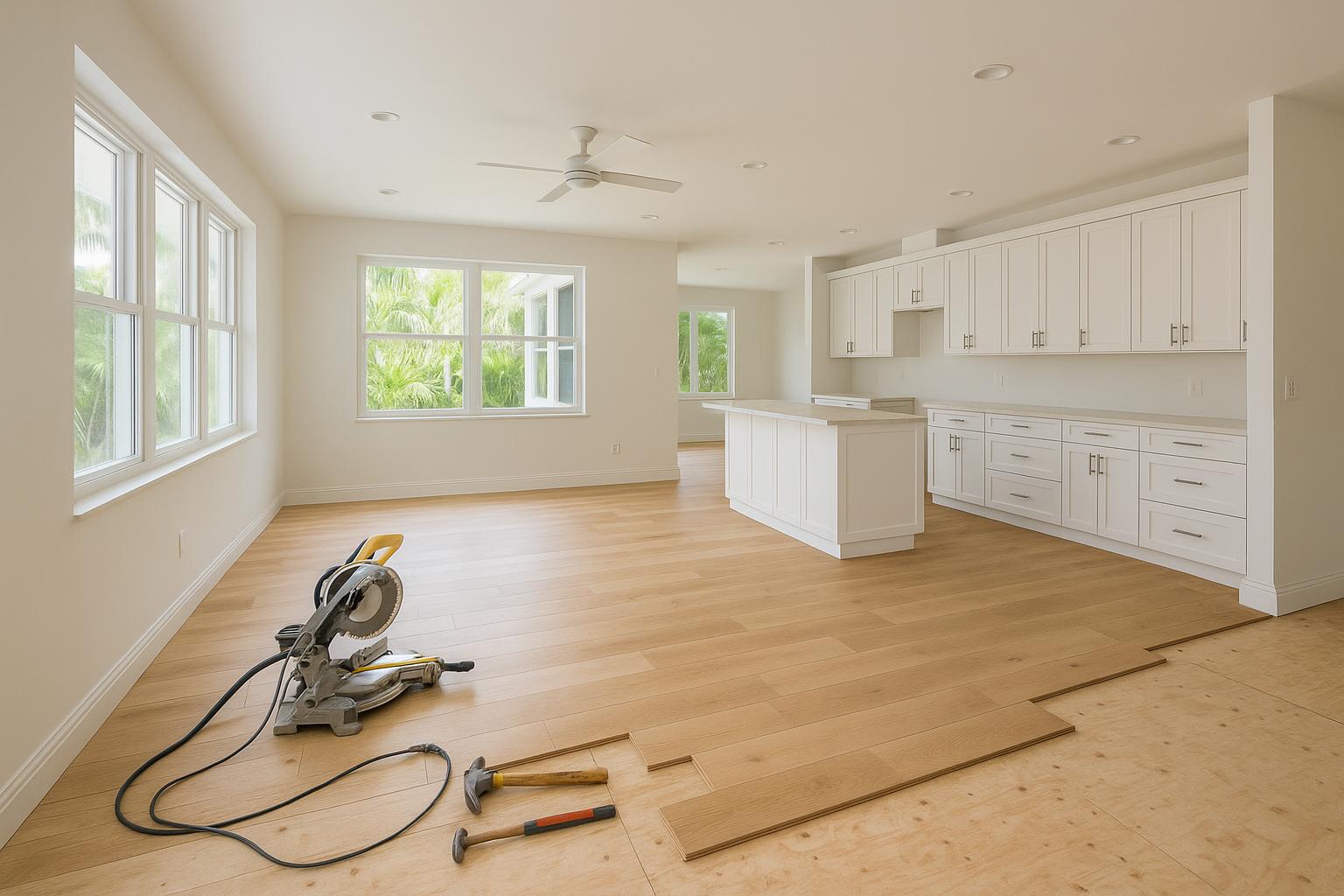
Why Whole-Home Remodeling Feels So Overwhelming
You've been dreaming about it for years — a kitchen that actually works for your family, bathrooms that feel like a retreat, fresh flooring that ties everything together, and paint colors that finally reflect your style. But the moment you start thinking about tackling multiple rooms at once, the excitement can quickly turn into anxiety.
Whole-home remodeling is one of the biggest investments West Palm Beach homeowners make. Between choosing materials, coordinating timelines, managing budgets, and living through construction, it's no wonder people feel overwhelmed before the first wall is touched. But here's the good news: with the right plan and the right team, a multi-room renovation doesn't have to be chaotic.
At TrueCraft Home Remodeling, we've guided homeowners across West Palm Beach, Wellington, Palm Beach Gardens, and surrounding communities through exactly this process. Here's what we've learned about keeping whole-home projects organized, on budget, and as stress-free as possible.
Step 1: Define Your Priorities Before You Pick a Single Tile
The biggest mistake homeowners make is jumping straight into Pinterest boards and showroom visits without first answering some fundamental questions:
- What's driving this remodel? Are you preparing to sell? Making a forever home more functional? Updating outdated spaces?
- Which rooms matter most? If the budget gets tight, would you rather have a stunning kitchen or a fully renovated master bath?
- What's your realistic timeline? Do you need everything done before the holidays, or can the project stretch over several months?
Writing down your priorities — and having every decision-maker in the household agree on them — prevents costly changes mid-project. This single step saves more time and money than almost anything else.
Step 2: Set a Realistic Budget (and Build in a Buffer)
Budgeting for a whole-home remodel is different from budgeting for a single room. When you're renovating your kitchen, bathrooms, and living areas simultaneously, costs can interact in ways you might not expect. For example, upgrading your flooring throughout the home is often more cost-effective per square foot than doing it room by room — but it requires a larger upfront commitment.
Here are some budgeting guidelines that work well for homeowners in the West Palm Beach area:
- Get detailed estimates, not ballpark figures. A trustworthy remodeling contractor will break down costs by room, materials, and labor so you can see exactly where your money goes.
- Allocate 10-15% as a contingency fund. Older South Florida homes sometimes reveal surprises behind walls — outdated plumbing, moisture damage, or electrical issues that need attention.
- Prioritize structural and functional upgrades over purely cosmetic ones. Custom cabinetry that maximizes storage will improve your daily life far more than a trendy backsplash.
Being honest about your budget from the start allows your remodeling team to suggest creative solutions that deliver the look and function you want without unnecessary overspending.
Step 3: Choose One Contractor to Manage Everything
Some homeowners try to save money by hiring separate specialists for each part of the project — one company for countertops, another for painting, a third for flooring. In theory, this sounds smart. In practice, it creates a coordination nightmare.
When no single team owns the overall timeline, delays cascade. The flooring crew shows up before the painters are finished. The cabinet installer arrives but the countertop measurements haven't been finalized. Suddenly, your two-month project stretches to four.
Working with a single remodeling company that handles kitchen remodeling, bathroom remodeling, flooring installation, cabinetry, countertops, and interior painting means one point of contact, one schedule, and one team that's accountable for the entire result. That's the approach we take at TrueCraft, and it's the reason our clients in Royal Palm Beach, Lake Worth Beach, and Riviera Beach consistently tell us the process was smoother than they expected.
Step 4: Plan the Construction Sequence Strategically
The order in which rooms are renovated matters more than most people realize. A well-planned sequence minimizes disruption to your daily life and prevents finished work from being damaged by ongoing construction nearby.
A typical whole-home remodel sequence looks something like this:
- Demolition and structural work — Remove old materials, address any plumbing or electrical updates, and handle anything behind the walls first.
- Cabinetry and built-ins — Custom cabinetry in kitchens, bathrooms, and storage areas goes in before countertops and finishing work.
- Countertop installation — Once cabinets are set and level, countertops are templated and installed.
- Interior painting — Painting happens after the dusty, messy work is done but before final flooring goes down.
- Flooring installation — New floors are one of the last major elements installed to protect them from construction traffic.
- Final details and touch-ups — Hardware, fixtures, trim, and a final walkthrough to make sure everything meets your expectations.
This sequence isn't rigid — every home is different — but it gives you a sense of how a professional team thinks about phasing work to protect your investment.
Step 5: Prepare Your Home (and Your Family) for Construction
Living through a remodel is the part nobody talks about enough. Here are practical tips from homeowners who've been through it:
- Set up a temporary kitchen. A microwave, mini-fridge, and coffee maker in a spare room or garage can keep life functional while your kitchen is under construction.
- Establish construction-free zones. Designate at least one room where your family can retreat from dust and noise.
- Communicate with your contractor about schedules. Knowing which days will be noisy and which will be quieter helps you plan work-from-home days or outings.
- Protect belongings. Move furniture, artwork, and valuables away from work areas. A good contractor will use dust barriers, but extra precaution never hurts.
South Florida's climate also plays a role. If your remodel involves open walls or removed windows, your contractor should plan around our afternoon rain patterns and humidity levels to protect exposed materials.
Step 6: Communicate Clearly and Often
The single biggest factor that separates a great remodeling experience from a frustrating one is communication. You should never feel like you're guessing what's happening in your own home.
Before your project starts, establish how you'll communicate with your contractor. Will there be weekly check-ins? A project management app? A daily summary? The method matters less than the consistency.
At TrueCraft Home Remodeling, clear communication is built into how we work. We believe homeowners deserve to know what's happening, what's coming next, and how any changes affect the budget or timeline. No surprises, no runaround.
Your Home Deserves a Thoughtful Plan
A whole-home remodel is a significant undertaking, but it doesn't have to be stressful. With clear priorities, a realistic budget, a trusted team, and open communication, you can transform your West Palm Beach home into the space you've always wanted — and actually enjoy the process along the way.
If you're considering a multi-room renovation and want to talk through your options, TrueCraft Home Remodeling is here to help. We serve homeowners throughout West Palm Beach, Palm Beach Gardens, Wellington, Lake Worth Beach, Royal Palm Beach, and Riviera Beach with honest craftsmanship and a commitment to getting it right.